
Heading 1
Heading 1

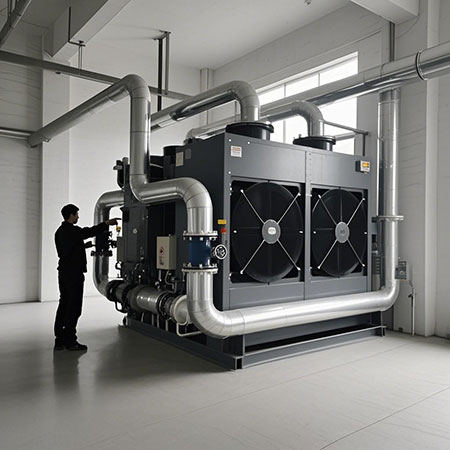
Central heating systems (such as heating networks in northern cities), residential and commercial central air conditioning systems use refrigerants (such as water, ethylene glycol solutions) to transfer heat, while antifreeze prevents pipes from freezing in winter. / In residential and commercial central air conditioning systems, refrigerants (such as water, ethylene glycol solutions) are used to transfer heat, and antifreeze prevents pipes from freezing during winter.
Antifreeze (such as ethylene glycol-based types) is commonly added to underfloor heating systems and radiator circulation pipes to prevent damage caused by freezing expansion.
Residential heating systems (underfloor heating / radiator)
Recommended type:
Implementation key points:
Before the initial operation of the system, it must be flushed with deionized water to avoid scaling caused by calcium and magnesium ions.
Industrial chillers
Recommended type:
Implementation key points:
The antifreeze must be compatible with the chiller material (for example, aluminum alloy heat exchangers require special-purpose antifreeze).
Service Hotline:199-3077-5010
Email:59020400@qq.com
Company Address:North of Guaijiaopu Village, Zhengding County, Shijiazhuang City
Follow our WeChat Official Account

Copyright © 2025 Benzhuang Technology All Rights Reserved 冀ICP备20006430号-1 SiteMap